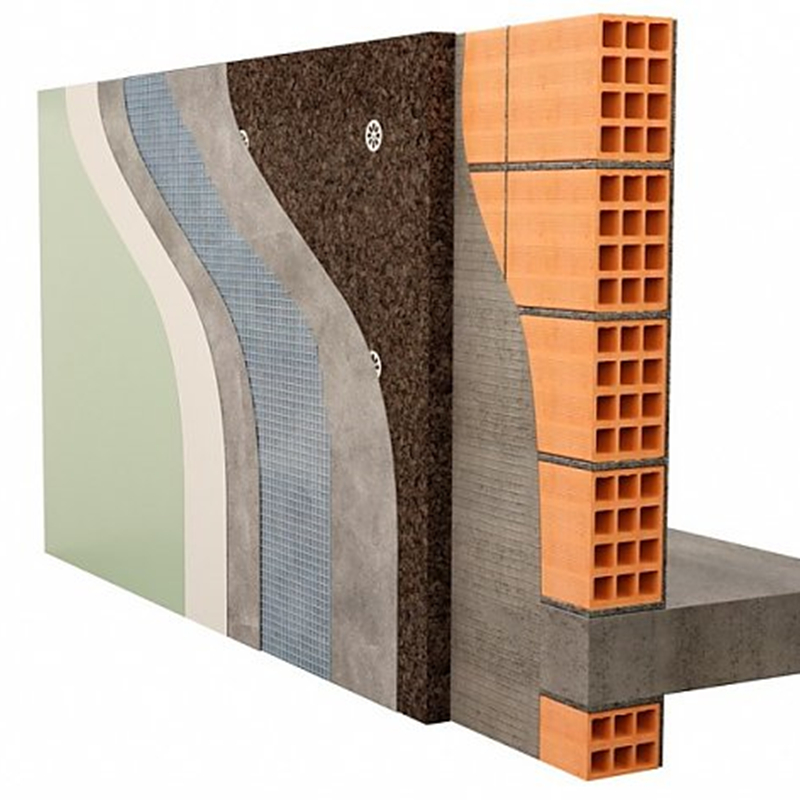

As global demand for energy-efficient buildings continues to rise, Exterior Insulation and Finish System (EIFS) technology has emerged as one of the most effective solutions for thermal insulation and exterior wall protection. Within these systems, Hydroxypropyl Methylcellulose (HPMC) has become an essential additive, significantly improving the performance of EIFS basecoat and adhesive mortars.
Industry experts highlight that the proper selection and use of HPMC is key to achieving the durability, workability, and insulation efficiency required in EIFS applications.
- Improving Adhesion and Mechanical Stability
EIFS mortars must adhere firmly to various substrates—EPS/XPS insulation boards, cement-based surfaces, or old walls. HPMC enhances adhesion by:
Providing uniform water retention for optimal cement hydration
Increasing bonding strength between mortar and insulation panels
Preventing premature drying that can lead to weak adhesion or delamination
Consistent adhesion is crucial for long-term system stability and resistance to weather changes.
- Superior Water Retention for Harsh Climates
EIFS projects often face challenges such as high wind, strong sunlight, or low humidity. HPMC’s excellent water-retention ability ensures:
Longer open time and workable life
Reduced risk of cracks and shrinkage
Longer-lasting hydration for improved strength development
This makes HPMC indispensable for EIFS installations in both hot and cold regions.
- Enhanced Workability and Spreadability
EIFS basecoat mortars must be easy to apply, smooth, and stable during troweling. HPMC contributes by:
Providing optimized viscosity and sag resistance
Enabling smooth application with less effort
Ensuring uniform thickness when embedding fiberglass mesh
Preventing mortar from sliding on vertical surfaces
Contractors benefit from faster installation, higher productivity, and more consistent finish quality.
- Reinforcing Crack Resistance and Durability
Crack resistance is essential for EIFS performance, especially due to thermal expansion and contraction. By regulating mortar rheology and hydration, HPMC helps:
Improve flexibility and deformation resistance
Minimize microcracks during curing
Enhance long-term weathering stability
Support overall system durability against wind, rain, and freeze–thaw cycles
These improvements significantly extend the lifespan of EIFS façades.
- Compatibility with Modern Additives and RDP
In EIFS formulations, HPMC works synergistically with Redispersible Polymer Powder (RDP) and other functional additives. The combination of HPMC and RDP brings:
Improved elasticity and impact resistance
Stronger bonding to insulation boards
Increased fatigue resistance under temperature fluctuations
Proper formulation design ensures high performance across all EIFS layers.
- A Growing Market Demand Driven by Global Energy Standards
With stricter building energy codes worldwide, EIFS systems are expanding rapidly in North America, Europe, the Middle East, and Asia. The market demand for high-grade HPMC tailored for EIFS mortars continues to grow.
Manufacturers are focusing on:
High-viscosity HPMC for superior water retention
Surface-modified grades for improved workability
Eco-friendly production to meet sustainability standards
The ongoing shift toward green construction further reinforces the importance of high-performance cellulose ethers.
Conclusion
HPMC plays a central role in the development of durable, high-performance EIFS mortars. From adhesion and crack resistance to workability and climate adaptability, HPMC delivers critical improvements that ensure stable, long-lasting exterior insulation systems.
As the global construction industry continues to push for energy-efficient and sustainable building solutions, the use of HPMC in EIFS mortars will remain a key technological advantage for material manufacturers and contractors worldwide.
Name: Cecilia.Wang
E-Mail:cecilia.wang@jtdf-rdp.com
Mobile:+86 190 3451 3486(Whatsapp)